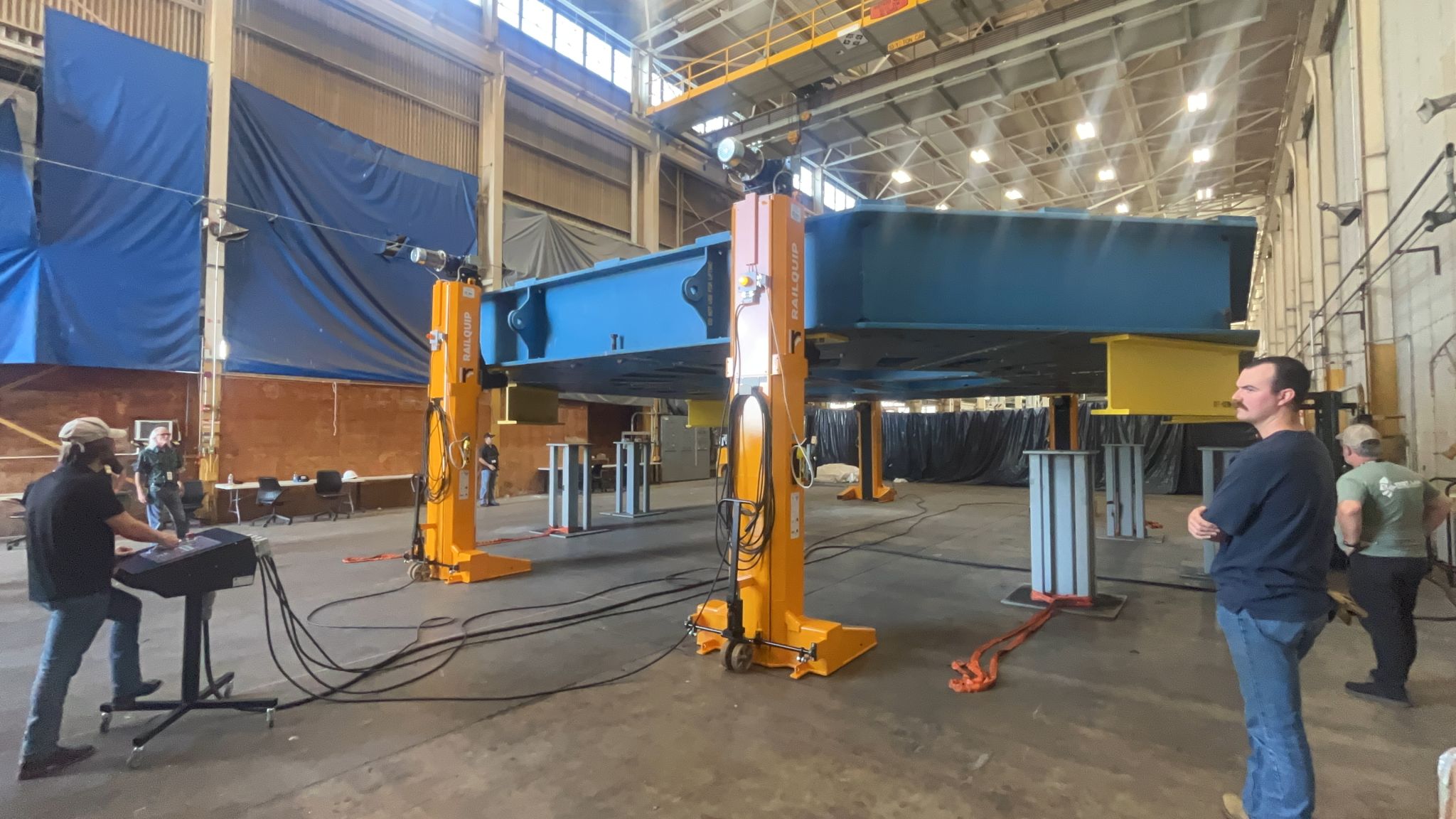
Rail lifting jacks play a critical role in railcar maintenance operations, supporting safe elevation for inspections, component replacements, and structural interventions.
These systems are engineered for high-load applications and continuous cycles, but their long-term performance is only guaranteed when supported by a disciplined maintenance program.
The following five tips are built around the most essential, evidence-based practices for keeping railway lifting equipment in optimal working condition. Each one reflects common pain points in rail maintenance environments and integrates the safety-first principles built into Railquip systems.
Tip 1. Maintain precise lubrication and control over hydraulic fluid conditions
The performance of both mechanical and hydraulic lifting jacks depends on two invisible forces: friction management and fluid pressure.
Failures in either system typically begin subtly, reduced lift speed, slight imbalance, abnormal mechanical noise, and escalate into equipment shutdowns or safety incidents.
Lubrication:
Lifting columns that use screw-thread mechanisms require consistent, high-quality lubrication across the full thread engagement length. Even systems fitted with automatic lubrication (like those from Railquip) need weekly inspection to confirm:
- That grease is reaching critical interfaces evenly
- That lubrication lines are not clogged or leaking
- That grease levels are maintained above the minimum threshold
In high-duty workshops, especially where airborne dust or extreme temperature variations are present, manual reapplication may be required to maintain thread integrity and prevent binding under load.
Hydraulic fluid:
For hydraulic jack systems, the fluid is not just a medium, it’s a structural component. Fluid contamination is one of the leading causes of seal degradation, pressure imbalance, and jerky movement. Implement a program that includes:
- Daily checks for fluid level, colour, and signs of aeration or water ingress
- Monthly condition analysis, including fluid sampling where possible
- Scheduled full replacements based on accumulated operating hours
Hydraulic systems are most vulnerable to failure during multi-column lifts when synchronisation matters most. A single underperforming cylinder can compromise load distribution, placing stress on both the structure and the operators.
Tip 2. Tie inspections to every phase of use, not just the calendar
Calendar-based maintenance intervals (monthly, quarterly, annually) are useful, but insufficient. Lifting jacks require inspection protocols that map directly to their actual use: before activation, while under load, and after completion of the cycle.
Before lifting:
- Conduct a visual scan of all exposed components: hoses, fittings, lifting arms, base plates, screw columns, power cables
- Inspect for oil residue near seals, abrasive contact marks, or signs of metal fatigue
- Test the control interface (pendant or central console) for display readability, emergency stop engagement, and jack ID signal integrity
During lifting:
- Monitor elevation behaviour for signs of desynchronisation, this includes uneven lifting speeds, delayed response in one or more columns, and tilt under load
- Use system-integrated feedback (Railquip includes height readings and load sensors) to verify that the load remains level across all contact points
- Stay alert for audible cues: hydraulic hiss, piston slippage, or actuator clicking can all indicate emerging issues
After lifting:
- Wipe down each jack, especially near seals and mechanical contact points
- Check for new leaks or unexpected wear marks
- Record the lift cycle (duration, load type, anomalies) in an equipment-specific logbook
If inspection becomes a habit—rather than a checklist—failures are caught before they become dangerous or expensive.
Tip 3. Target wear-prone components with higher-frequency inspections
The structural steel of a lifting jack can last decades. What fails first, almost without exception, are the smaller, serviceable parts that work under pressure: hydraulic hoses, seals, electrical components, control switches, sensors, and screw threads.
Key focus areas include:
- Hydraulic hoses: Check for swelling near crimps, surface cracking, and abrasion caused by contact with sharp edges or misaligned brackets
- Seals and gaskets: Verify elasticity and tightness; a single cracked seal can depressurise a system mid-cycle
- Screw threads and follower nuts: Inspect for pitting, galling, discoloration, or changes in thread pitch—these can indicate overheating or mechanical stress
- Control units and pendant cables: Test button resistance, ensure emergency stop triggers immediately, and check that signal relays are intact
- Safety interlocks and limit switches: Clean and verify contact. Dirt buildup can create false readings or delayed engagement
Railquip’s jacks include several of these components pre-integrated: nut wear detection, load monitoring, and limit systems, but none of those reduce the need for manual review. Operators should never defer action based solely on lack of alarms.
Create a tiered inspection plan:
- Daily: surface-level review, diagnostics check, seal and cable scan
- Weekly: mechanical component testing, thread lubrication, jack alignment
- Quarterly: disassembly of high-wear sections, deeper electrical tests, controller calibration
Tip 4. Align maintenance practices with OSHA and ISO expectations
It’s not enough to own equipment that meets safety standards, the way you maintain it has to meet those same expectations. OSHA and ISO frameworks both emphasise proactive control over mechanical risks, meaning lifting systems must be managed, not just used.
Start with documentation:
- Maintain written logs for all inspections, repairs, part replacements, and operator training
- Link log entries to individual equipment IDs, not just facility-wide reports
- Include fault descriptions and resolution steps for full traceability
Train your team properly:
- Emergency stop systems, limit overrides, and manual lowering procedures should be practiced quarterly
- New operators should undergo jack-specific familiarisation—even if they’ve used other models before
- Verify that all safety features are present and functional (deadman switches, e-stops, limit switches, diagnostics)
Railquip equipment is built to assist in this process through ISO 9000-based quality assurance, safety-first design, and integration-ready controls but your internal process is what turns that design into compliance.
Tip 5. Plan for spare parts access and technical reference support
Even the best-maintained jack will eventually need parts. The key to long-term performance isn’t avoiding wear—it’s planning for it with structured support and predictable service cycles.
Spare parts readiness:
- Stock seals, cables, sensors, and wear components that are most likely to degrade
- Log part replacements and usage rates to project future procurement timelines
- Avoid using universal substitutes: Railquip parts are engineered to tight tolerances that maintain safety ratings
Support materials and technical documentation:
Railquip systems ship with detailed documentation, including control unit references, safety protocols, and configuration specs. These should be stored centrally, accessible to any technician performing inspections or adjustments.
In-house servicing is viable for many facilities, but when in doubt, contact Railquip directly to confirm procedures or order factory-direct parts.
Final Note: Good maintenance isn’t optional, it’s the cost of reliability
All lifting systems wear. That’s not failure—it’s a normal consequence of mechanical stress, environmental exposure, and repeated load cycles. The difference between a safe, functioning jack and one that fails during operation isn’t in how it was built—it’s in how it’s maintained.
Lubrication dries out. Threads deform. Hydraulic fluid degrades. Sensors lose calibration. These things are inevitable. What’s not inevitable is downtime, injury, or regulatory risk. Those are outcomes of poor maintenance planning and delayed response.
The five practices outlined in this article—structured lubrication, cycle-based inspections, proactive part replacement, compliance tracking, and spare parts readiness—aren’t just “tips.” They’re the core pillars of any serious maintenance program for railway lifting equipment.
When these actions are built into your maintenance workflow, you don’t just extend the life of your lifting jacks—you protect your team, avoid unplanned stoppages, and stay audit-ready. And when you work with Railquip, you start with equipment designed to make all of that easier.
Choose lifting systems designed for real-world maintenance, not just ideal conditions.
Railquip’s railway lifting equipment is engineered with built-in safety systems, diagnostic tools, and component access that make ongoing upkeep easier, faster, and more predictable.
From threaded columns with nut wear detection to jacks equipped with automatic lubrication and load monitoring, every design detail supports your team’s ability to maintain equipment without unnecessary downtime.
Whether you’re setting up your first inspection plan or reinforcing an existing one, Railquip gives you the tools to make maintenance part of your performance strategy not a disruption to it.
Explore Railquip’s full range of maintenance-ready lifting systems and talk to our team today: www.railquip.com